Falls are the leading cause of death on Kenyan construction sites. Here is what full-body harnesses, lanyards, anchor points and rescue plans actually require — with inspection and selection guidance.
Falls from height remain the number one cause of fatal workplace accidents in Kenya's construction industry. The good news: falls are almost entirely preventable with correctly selected, correctly used and correctly inspected fall protection systems. This article covers the essentials every site manager and safety officer needs.
The three elements of a fall arrest system
A complete system has three parts — and all three must be compatible:
- Anchorage — the point the system attaches to (beam, anchor post, certified lifeline).
- Connecting means — lanyard, shock absorber or retractable lifeline.
- Body support — a full-body harness, never a body belt.
Full-body harnesses: the non-negotiable
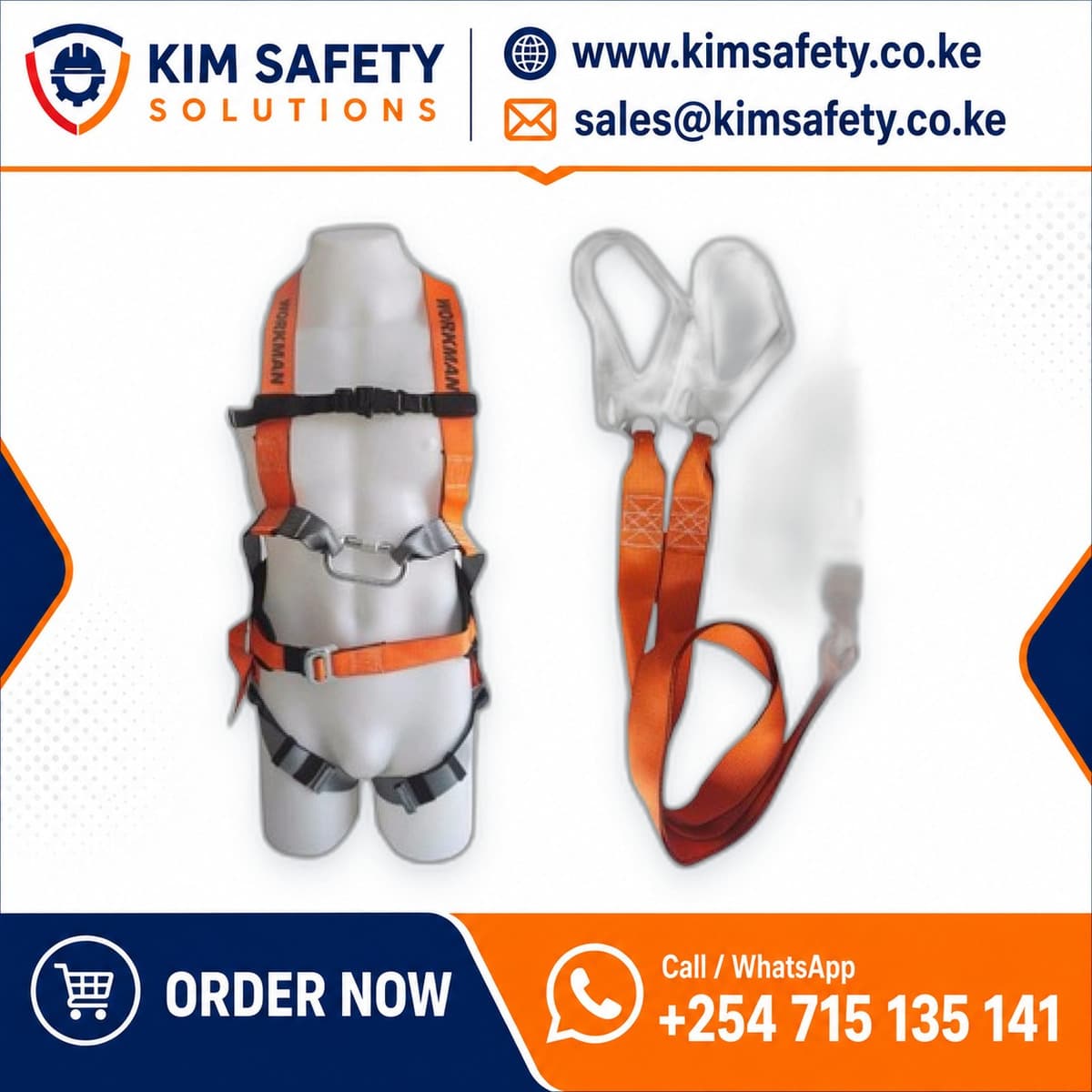
Body belts are banned in modern fall arrest for good reason: in a fall, they concentrate force on the abdomen and can cause fatal internal injuries. A full-body harness distributes the force across the thighs, chest and shoulders.
When selecting harnesses, look for:
- Compliance with EN 361 (fall arrest harness) — the standard to demand.
- Quick-release buckles that stay adjusted once set.
- Load-tested D-rings with clear markings.
- Lightweight webbing for hot Kenyan sites — 3M and MSA designs balance comfort and safety.
Popular choices include the double-hook harness with shock absorber — the double hooks allow constant connection when moving between anchors.
Lanyards and shock absorbers
A lanyard alone can generate forces above 6 kN in a fall — enough to injure or break anchors. Always use a shock-absorbing lanyard to keep forces below 6 kN, or a retractable lifeline (inertia reel) which limits both force and fall distance.
Remember the free-fall rule: the lanyard must be attached so that free fall does not exceed 1.8 metres, and the total clearance below the worker must accommodate the deployed lanyard, harness stretch and safety margin.
Anchor points: strong enough for 15 kN
Fall arrest anchors are typically rated to hold at least 15 kN (more than 1.5 tonnes) — one anchor per worker. Never tie off to scaffolds, pipes or guardrails unless they have been engineered as anchors. For multi-worker work, use certified horizontal lifelines.
The 12-point site checklist
Our full working at height checklist covers every item; the essentials are:
- Anchorage rated and inspected for this shift.
- Harness webbing free of cuts, fraying, burns or chemical damage.
- All stitching intact — no loose or pulled threads.
- Buckles, D-rings and adjusters function correctly.
- Lanyard shock absorber pack not deployed (or replaced if it is).
- Lifelines routed to minimise swing and rubbing.
- Free fall distance within limits.
- Worker trained and competent on this system.
- Edge protection in place where practicable.
- Tools secured to prevent dropped-object hazards.
- Rescue plan exists for a fallen worker — never leave a worker hanging.
- Inspection records up to date (professional inspection every 6–12 months).
Rescue: the plan people forget
Suspension trauma can kill a worker within 30 minutes of hanging motionless. Every site with fall risk needs a documented rescue procedure — and someone trained to execute it.
Buying fall protection in Kenya
Only purchase harnesses, lanyards and lifelines from authorised suppliers who can provide EN/CE certification documentation per batch. Browse certified construction safety equipment and request volume pricing for full site outfitting.