ABC dry powder, CO2, foam and water extinguishers do very different jobs. This guide explains the fire classes, the right extinguisher for every Kenyan workplace and the maintenance rules that keep you compliant.
Fire extinguishers are the most visible safety device in any Kenyan building — and the most misunderstood. Choose the wrong type and a small fire can become an uncontrollable one. Choose the right type, and a trained employee can stop a blaze in seconds.
First: understand the fire classes
Fires are classified by what is burning. Kenyan signage and extinguishers follow the international colour-coded system:
- Class A — ordinary combustibles: wood, paper, cloth, plastics.
- Class B — flammable liquids: petrol, diesel, solvents, cooking oil.
- Class C — gases: LPG, acetylene, methane.
- Class D — combustible metals: magnesium, aluminium powder (rare on normal sites).
- Class F — cooking oils and fats (deep fryers).
- Electrical fires — energised equipment; not a class, but critical when selecting.
The main types sold in Kenya
ABC dry powder
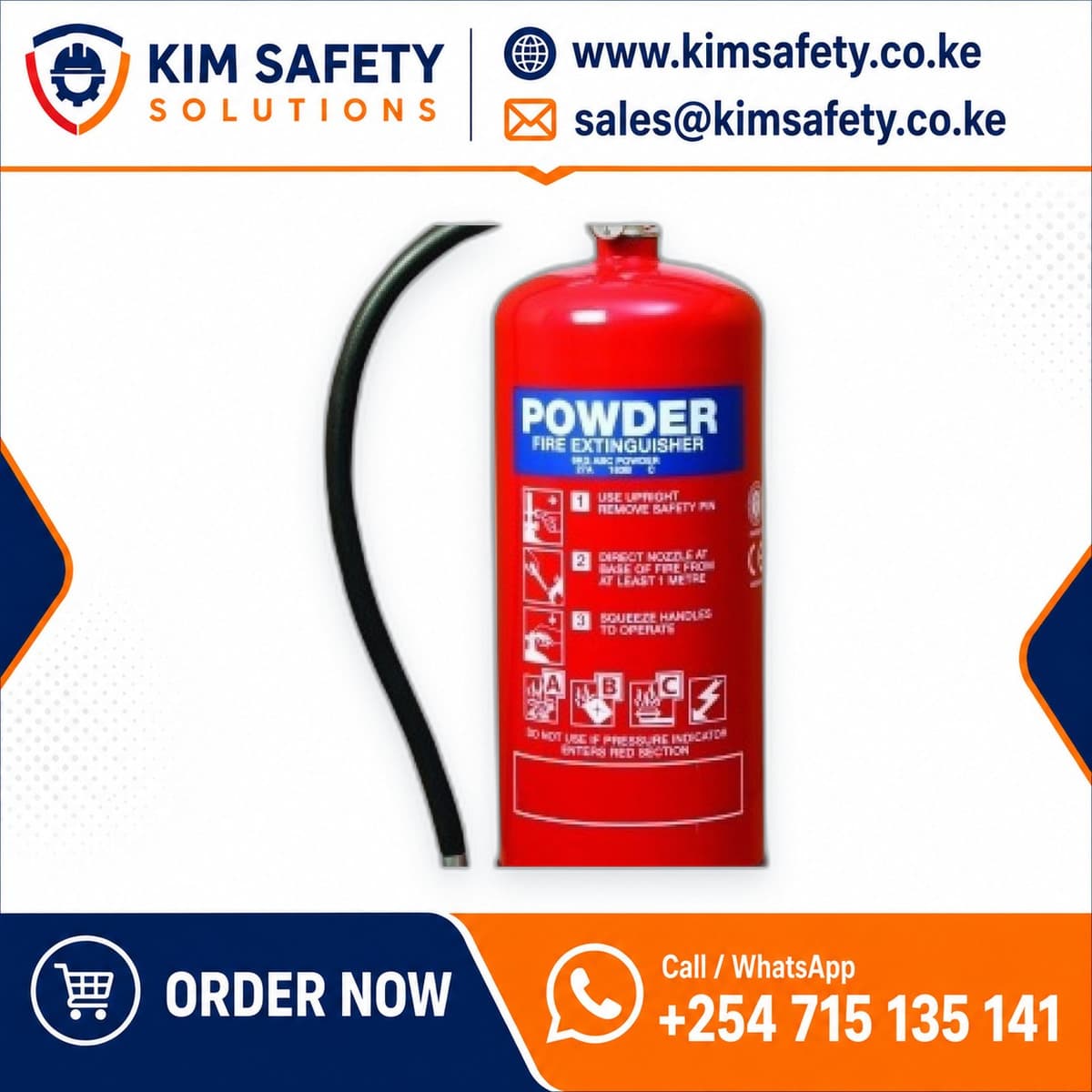
The workhorse of Kenyan workplaces. One unit handles classes A, B and C plus live electrical equipment. Cheap, effective and available everywhere. Its downsides: powder residue is messy and can damage electronics and machinery.
Best for: general offices, warehouses, factories, shops and vehicles. Our 6kg ABC dry powder extinguisher is the most common choice for medium facilities.
CO2 (carbon dioxide)
Leaves no residue at all, which makes it the standard for server rooms, laboratories, electrical panels and kitchens. Discharges as freezing gas and suffocates the fire. Weaker against deep-seated class A fires.
Best for: electrical rooms, IT centres, laboratories, catering.
Foam
Excellent against flammable liquid fires (class B) and works on class A too. Forms a blanket that prevents re-ignition. Common in fuel depots, workshops and processing plants.
Water
Class A only — and dangerous on electrical or oil fires. Still useful in some industrial settings, but being steadily replaced by multi-purpose units.
How many do you need?
Kenyan fire safety practice, aligned with international guidance, recommends:
- A minimum of one 6kg ABC extinguisher per 200 m² of floor space.
- Extinguishers within 30 metres of travel at all times.
- Extinguishers near specific hazards: kitchens, generators, fuel storage, electrical panels.
- At least one extinguisher per floor in multi-storey buildings.
Local authorities and insurance firms often require documented compliance — keep a site map showing extinguisher positions and their last inspection dates.
Maintenance: the monthly 8-point check
Follow our detailed monthly inspection checklist. In short:
- Pressure gauge in the green zone.
- Safety pin and tamper seal intact.
- No dents, corrosion or leaks on the cylinder.
- Hose and nozzle clear of blockages.
- Weight consistent with the service label.
- Access not blocked and signage visible.
- Service tag current (professional servicing every 1–2 years).
- Staff trained on how to use it.
Use the acronym PASS for training: Pull the pin, Aim at the base, Squeeze the handle, Sweep side to side.
Buying new or refilling
Only buy from suppliers who can show certification and a current service network. KimSafety supplies certified extinguishers and fire safety equipment nationwide, with refill and maintenance arrangements through our partners.