
A practical, repeatable method for identifying, assessing and controlling hazards in Kenyan workplaces — with the hierarchy of controls, documentation templates and how to turn findings into a PPE plan.
Every injury on a worksite can be traced back to a hazard that was never identified — or was identified and ignored. A proper hazard assessment is the single highest-leverage activity an employer can run. It is also required by Kenya's OSH Act 2007 and expected by DOSHS inspectors.
What the law expects
Section 6 of the OSH Act obliges employers to ensure a safe working environment. In practice, DOSHS expects you to show a documented risk assessment process. The goal is not paperwork for its own sake: it is a written record that you identified hazards, assessed their severity and implemented controls.
Step 1: Walk the work, not just the building
Conduct assessments where work actually happens — at dawn for night shifts, during peak production, in the rain. Watch tasks being performed, interview workers and photograph problem areas. Workers will show you hazards you would never find from an office.
Step 2: Classify the hazards
Group what you find into standard categories:
- Physical: noise, vibration, temperature extremes, radiation, moving machinery.
- Chemical: solvents, dusts, fumes, gases, corrosives.
- Biological: blood-borne pathogens, waste, infectious materials.
- Ergonomic: manual handling, repetitive motion, poor workstations.
- Psychosocial: stress, fatigue, violence, lone working.
Step 3: Rate risk = likelihood × severity
Use a simple 5×5 matrix. Score each hazard for likelihood (1 = rare, 5 = almost certain) and severity (1 = first aid, 5 = fatality). Multiply for a risk score:
- 1–4: low — monitor and maintain controls.
- 5–9: medium — schedule corrective action.
- 10–15: high — act quickly; interim controls now.
- 16–25: critical — stop work until controlled.
Step 4: Apply the hierarchy of controls
Never jump straight to PPE. Work down this list in order:
- Elimination — remove the hazard entirely (e.g. ban a hazardous process).
- Substitution — replace with something safer (water-based solvent instead of volatile).
- Engineering controls — guards, ventilation, machine isolation.
- Administrative controls — rotas, training, permits-to-work, signage.
- PPE — the last line of defence, not the first.
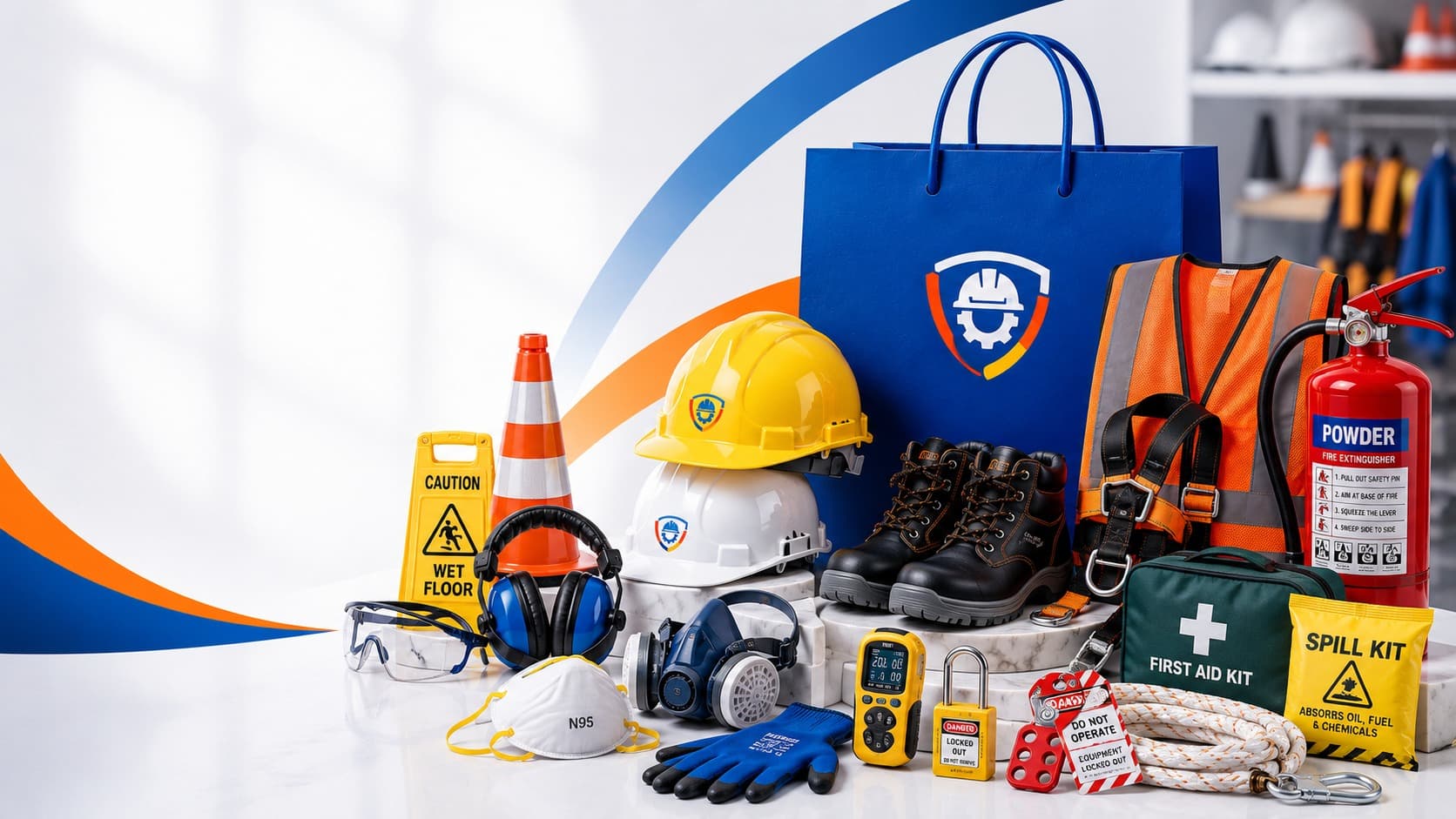
When PPE is required, select it from certified stock and train workers on fit and use. Our PPE selection matrix maps each hazard to the right equipment.
Step 5: Document and communicate
A one-page register per department is enough to start. For each hazard record: description, location, risk score, control measures, responsible person and review date. Share findings at toolbox talks and keep the register where workers can see it.
Step 6: Review on a schedule — and after every incident
Review at least annually, whenever processes change, after near-misses and after every injury. A stale risk assessment is itself a hazard.
Turning findings into action
Where your assessment identifies PPE needs, browse the certified range and request bulk pricing — with proper documentation for your audit trail.