What the Kenyan workplace first aid regulations require, the contents list to stock, how many kits your premises needs and why refills are a compliance issue, not a convenience.
Every Kenyan workplace must provide first aid facilities — it is a direct legal requirement, not a suggestion. Yet most first aid boxes we see on site are either empty, expired or stocked with items that do not match the risks of the workplace. This guide fixes that.
What the law requires
Kenya's OSH Act 2007 and the accompanying First Aid Regulations require employers to provide:
- First aid boxes containing the specified contents, maintained and accessible.
- A person trained in first aid (the number scales with workforce size and shift patterns).
- Where risk demands it, a first aid room — for example on larger industrial sites.
- Records of first aid treatments given.
DOSHS inspectors routinely check first aid provision, and it is frequently among the first items noted on non-compliance reports.
How many kits do you need?
As a practical rule:
- One kit per 25 workers per site.
- One kit per floor in multi-storey buildings.
- Additional kits near high-risk areas: kitchens, workshops, laboratories, electrical rooms.
- A kit in every vehicle that transports employees or goods.
The essential contents list
Use this as the baseline for a general workplace kit:
- Sterile gauze dressings — multiple sizes (5×5 cm, 10×10 cm).
- Adhesive plasters, assorted sizes (hypoallergenic).
- Triangular bandages (at least 2).
- Roller bandages — crepe and conforming (5 cm and 10 cm).
- Scissors, tweezers, safety pins.
- Disposable examination gloves (nitrile preferred).
- Adhesive tape and a tape roll.
- Antiseptic wipes or solution.
- Eye wash — at least 500 ml sterile solution per station.
- Burn dressing or hydrogel.
- Resuscitation face shield.
- First aid guide card.
- Record book and pen.
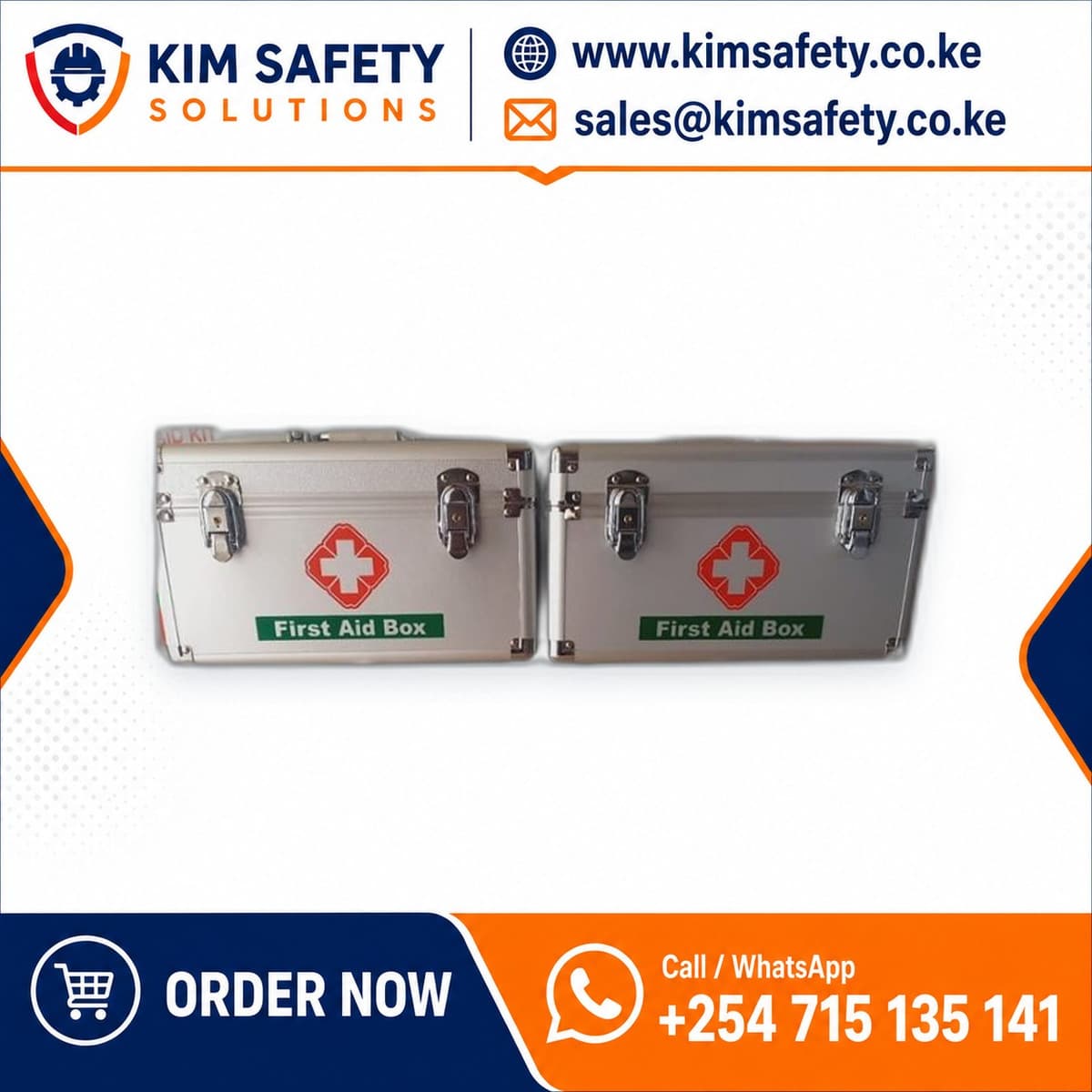
We stock complete certified first aid kits from compact wall kits to 25-piece rescue boxes for larger teams.
Industry-specific additions
- Kitchens & hotels: burn dressings, extra eye wash.
- Factories & workshops: trauma dressings, tourniquets, large burn kits.
- Laboratories: chemical eye wash stations, neutralising solutions.
- Construction: trauma kits, cold packs, finger splints.
- Healthcare: clinical-grade consumables in larger volumes.
Maintenance: refills are compliance
An empty box is the same as no box. Build a monthly routine:
- Check expiry dates on every item — dressings and antiseptics degrade.
- Replace used items immediately — log usage in the treatment book.
- Top up monthly; restock completely after any incident.
- Assign a named custodian per kit.
- Keep kits in dry, visible, accessible locations — away from heat.
Stock and refill supplies (including glove boxes and dressings in bulk) are available from our emergency response range.
Training matters more than the box
Equipment without trained people is decoration. Ensure a certified first aider is on site for every shift, and run a refresher at least annually. If you are setting up a first aid programme from scratch, pair your kit purchase with first aid training for your team.